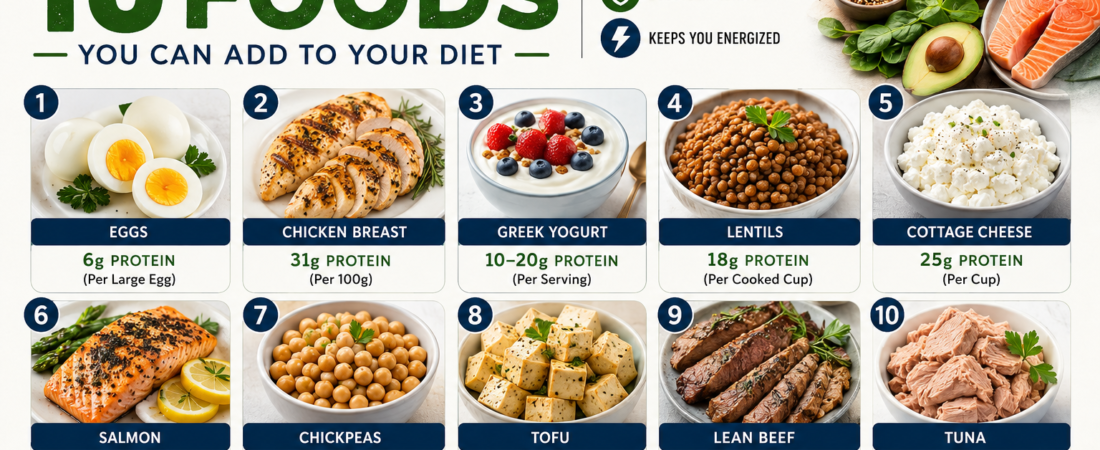
10 High-Protein Foods You Can Add to Your Diet
Protein is one of the most essential nutrients your body needs every day. It plays a vital role in building muscles, repairing tissues, producing enzymes and hormones, supporting your immune system, and keeping you feeling full for longer. Whether you’re trying to lose weight, gain muscle, or simply eat healthier, adding more high-protein foods to your meals is one of the best dietary changes you can make.
In this guide, we’ll explore the 10 best high-protein foods you can easily include in your daily diet.
1. Eggs
Protein: About 6 grams per large egg
Eggs are considered one of the highest-quality protein sources because they contain all nine essential amino acids. They’re also rich in vitamin D, choline, selenium, and healthy fats.
Benefits
- Supports muscle growth
- Keeps you full longer
- Excellent breakfast option
- Affordable and versatile
How to Eat
- Boiled
- Scrambled
- Omelets
- Egg sandwiches
2. Chicken Breast
Protein: Around 31 grams per 100 grams
Chicken breast is lean, low in fat, and packed with protein, making it one of the most popular choices for athletes and fitness enthusiasts.
Benefits
- Builds lean muscle
- Supports weight management
- Low in saturated fat
Best Ways to Cook
- Grilled
- Baked
- Air-fried
- Stir-fried
3. Greek Yogurt
Protein: Approximately 10–20 grams per serving
Greek yogurt contains nearly double the protein of regular yogurt while also providing probiotics that support gut health.
Benefits
- Improves digestion
- High in calcium
- Great snack option
Try it with:
- Berries
- Honey
- Nuts
- Chia seeds
4. Lentils
Protein: Around 18 grams per cooked cup
Lentils are one of the best plant-based protein sources and are also rich in fiber, iron, and folate.
Benefits
- Supports heart health
- Keeps you full longer
- Budget-friendly
- Excellent for vegetarians
5. Cottage Cheese
Protein: Around 25 grams per cup
Cottage cheese is rich in casein protein, which digests slowly and helps maintain muscle recovery throughout the day or overnight.
Benefits
- Great before bedtime
- Rich in calcium
- Low in carbohydrates
6. Salmon
Protein: About 22 grams per 100 grams
Salmon is loaded with protein and omega-3 fatty acids that support heart and brain health.
Benefits
- Promotes heart health
- Supports brain function
- Rich in Vitamin D
7. Chickpeas
Protein: About 15 grams per cooked cup
Chickpeas are nutritious legumes packed with both protein and dietary fiber.
Benefits
- Supports digestion
- Helps control blood sugar
- Excellent meat alternative
Popular recipes include hummus, curries, salads, and roasted chickpea snacks.
8. Tofu
Protein: Around 8–10 grams per 100 grams
Made from soybeans, tofu is a complete plant protein and a staple in many vegetarian and vegan diets.
Benefits
- Low in calories
- Rich in iron
- Versatile ingredient
9. Lean Beef
Protein: About 26 grams per 100 grams
Lean beef provides complete protein, vitamin B12, zinc, and iron.
Benefits
- Supports muscle recovery
- Helps prevent iron deficiency
- Rich in essential nutrients
Choose lean cuts and avoid excessive processed meats.
10. Tuna
Protein: Around 29 grams per 100 grams
Tuna is one of the highest-protein seafood options and is low in fat.
Benefits
- High-quality protein
- Supports muscle repair
- Convenient canned option
Why Is Protein Important?
Eating enough protein can help:
- Build and maintain muscle mass
- Support healthy bones
- Keep you full longer
- Reduce unhealthy snacking
- Speed up recovery after exercise
- Strengthen the immune system
- Support healthy skin and hair
Tips for Adding More Protein to Your Diet
- Eat protein with every meal.
- Replace sugary snacks with Greek yogurt or cottage cheese.
- Add beans or lentils to soups and salads.
- Include eggs in your breakfast.
- Choose grilled chicken instead of fried foods.
- Snack on roasted chickpeas or nuts.
- Pair protein with vegetables and whole grains for balanced meals.
Frequently Asked Questions (FAQs)
Which food has the highest protein?
Chicken breast, tuna, lean beef, and cottage cheese are among the highest-protein foods commonly included in a healthy diet.
How much protein should I eat daily?
Protein needs vary based on age, activity level, and health goals. Many adults benefit from roughly 0.8 grams of protein per kilogram of body weight, while athletes and highly active individuals often require more. A registered dietitian can help determine your specific needs.
Can vegetarians get enough protein?
Yes. Foods like lentils, chickpeas, tofu, Greek yogurt, cottage cheese, and eggs (if included in the diet) can provide plenty of protein.
Is eating too much protein harmful?
Most healthy people can consume a high-protein diet safely as part of a balanced eating pattern. However, extremely high protein intake may not be appropriate for everyone, especially people with certain kidney conditions. Consult your healthcare provider if you have medical concerns.
Final Thoughts
Adding more high-protein foods to your daily meals is one of the simplest ways to support your overall health. Whether your goal is building muscle, managing weight, or improving your nutrition, these protein-rich foods can help you stay energized and satisfied.
Start by including one or two of these foods in your meals each day, and gradually build a balanced diet that includes plenty of fruits, vegetables, whole grains, healthy fats, and quality protein source
Disclaimer: This article is for educational purposes only and is not a substitute for professional medical or nutrition advice. If you have a health condition or specific dietary requirements, consult a qualified healthcare professional before making major dietary changes.